


Warning!! URGENT UPDATE - COOK STRAIT FERRY CAPACITY NOW SERIOUSLY RESTRICTED
From 22 June through to 25 September, Interislander will be operating with just one vessel, creating critically reduced capacity across the Cook Strait network. Available sailings are expected to fill extremely quickly, with freight being prioritised and very limited space remaining for passenger and vehicle bookings.
The situation is now proving to be worse than originally anticipated.
Bookings for the peak summer period are already filling at a rapid pace across both Bluebridge and Interislander. Last summer, December, January, February, and March all sold out up to three months in advance, and current booking trends indicate the same situation is likely to happen again - potentially even earlier.
As we have all seen, weather disruptions and ongoing vessel availability issues can quickly impact remaining capacity, making last-minute bookings increasingly difficult or impossible.
If you are planning any inter-island travel over the coming months or during the 2026-2027 summer season, we strongly recommend securing your crossing immediately. Waiting is highly likely to result in missing out altogether.
Freshwater gold clams are a real problem!!!
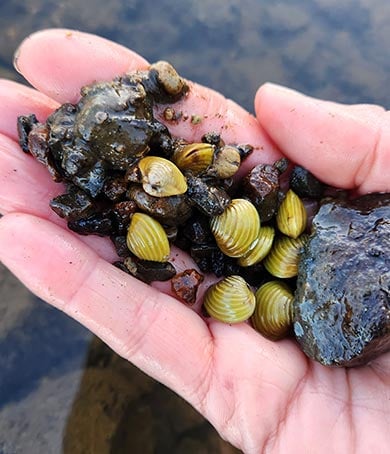

Use Check, Clean, Dry to prevent the spread
Check – for what is visible
Remove any plant matter, mud or visible clams from your gear and leave it at the river or lake bank, or put it in the rubbish.
Drain all river or lake water from your boat and gear after every event, then clean the boat before the next event.
Clean – for what is not visible
Blast your gear and craft with tap water onto grass, not into a stormwater system or drain.
For absorbent materials, use one of these treatments and refer to the manufacturer’s instructions if needed:
-
-
-
-
-
-
-
-
-
-
-
-
-
-
-
-
-
- Soak in hot tap water (50°C to 55°C) for at least 5 minutes, or
- Soak in 5% bleach solution (5-litre mix = 250ml bleach in 4.75 litres water) for an hour, or
- Freeze till solid (overnight), or
- Soak in salt solution at 100ppt (parts per thousand) (5-litre mix = 500g salt in 5 litres warm water) for 4 hours.
-
-
-
-
-
-
-
-
-
-
-
-
-
-
-
-
Dry – to be sure
-
-
-
-
-
-
-
-
-
-
-
-
-
-
-
-
-
- Gear: allow gear to dry to touch, inside and out, then leave it to dry for at least 48 hours (2 days) before using again.
- Watercraft: dry areas inside the watercraft where water has pooled, for example with an old towel, and then leave the craft to dry for at least 48 hours (2 days). The hull of a watercraft will dry when towed.
-
-
-
-
-
-
-
-
-
-
-
-
-
-
-
-

Here in NZ we race many types of craft on oval or triangular left hand turn tracks which range in overall length of between 1 and 2 kilometers. Our courses are on New Zealand’s many inland waterways, lakes, rivers and sheltered harbours.
Circuit racing boats include Hydroplanes, Racing Runabouts, V-Bottoms and Tunnel Boats. They range in size and speed from ten (10) foot long with a top speed of 60 kph boats through to the big GP Hydroplanes that are seven (7) metres in length and capable of speeds of over 250kph.
On this site you will find class descriptions, race team profiles, our race calendar, racing news, classified advertisements, contact details for provincial clubs, drivers clubs and our national executive as well as photo galleries of our current and past racers. There is also a growing page of links to other boat racing sites.


